The future of the green sector. The Smart City.

The future of the green sector. The Smart City.
When I was in high school, it was certainly not cool to be a nerd. Nerds did not get any girls and certainly not the handsome. That image is completely tilted. In our ICT-driven society, nerds are the new stars. The magazine City + Green brought together five nerds from the green sector to talk with a number of administrators and customers about the future of the green sector
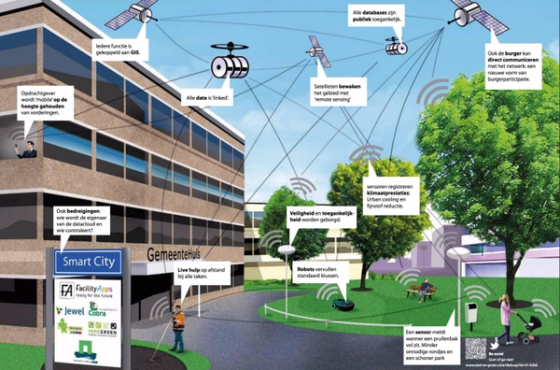
In addition, as the magazine City + Green, we had the dream that, with the disposal of so much brainpower, we could in one effort create one coherent image of how we will manage public space in the future. It soon became very easy, but also difficult at the same time.
IT, the future of the green sector
Looking at the role of ICT in the sector, you do not have to be a prophet to predict that information technology in all forms will become increasingly important. There is a huge cloud of green data coming in the future of the green sector, enabling us to know everything, to predict everything and to better manage public space.
Predictive in green and landscaping
Whenever we weed a round – but it also applies to mowing or smoothness – you always make the whole round. That takes time and money. Based on historical and growth models and / or monitoring with sensors, you can accurately predict where weeds grow and where not. Then you can meet the image with less work. This way you can plan the most advantageous round.
The next step is to gather data that lets you predict where you likely need to do something at some point. This can be done with historical growth models, but also with all kinds of sensor technology. Dirk Tuip is director of FacilityApps. His company is developing Apps that allow administrators to better plan and organize their work. In the cleaning world, sensors are currently being used to record how many people stay in a particular space. Joost Verhagen is from Cobra Tree Advisers. His company is one of the driving forces behind Boomregister.nl. That is a database in which all Dutch tree crowns are collected.
Democracy and the big five – the real Smart City
Will information technology ensure that our society becomes fairer and more democratic? On the one hand, yes. For now it is still the one who has the biggest mouth, will probably be the first and fastest to be helped. Knowledge and information are power. Even though the Big Four - Google, Facebook, Amazon and Apple - are no longer controlled by our national parliament and our politicians.
Burger participation in green management
The most important game changer is probably the citizen. With a few exceptions, the citizen is now mainly a consumer of public space, but in the future it could just be that the citizen, in addition to the consumer or user, becomes director, co-creator, executor, client and even financier. Dirk Tuip: 'When citizens realize that their homes will be worth more because of a well-groomed green environment, they are going to commission themselves without the municipality being there as a traditional source of money.'
Trends and developments at gardeners and green managers
1. Sensing- en monitoring technology (sensors, cameras, satellite images, IoT)
Rapid development in sectors such as energy, logistics and agriculture and horticulture. Not as fast in urban areas generating of data (big data, from various sources)
2. Robotics en autonomous vehicles
Rapid development in sectors such as traffic and logistics. Also in agriculture and horticulture (autonomous tractors, picking robots). Not as fast in urban areas (autonomous mowers on some golf courses)
3. High quality green in urban areas
Healthy living environment, improving air quality, biodiversity, water storage, cooling
4. Trend: Saving and Monotony
Related posts
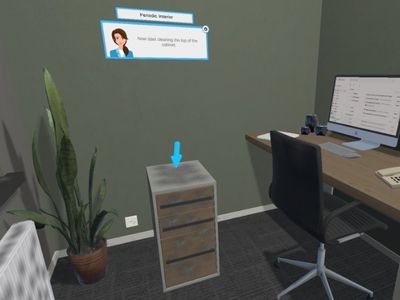
Cleaning Workx, powered by FacilityApps, launches new 'Periodic Cleaning' training modules
Cleaning Workx introduces the Periodic Interior and Periodic Sanitary modules — the most requested addition among existing customers. Available immediately in 18 languages as part of the core platform.
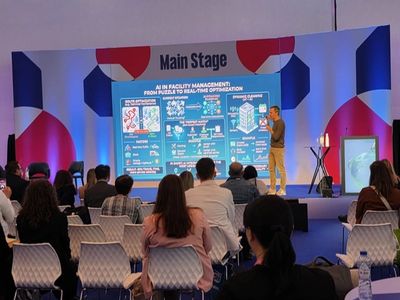
From invisible to intelligent: the cleaning industry must shape its own AI future
A manifesto for the cleaning industry: will we be passive recipients of AI disruption, or active architects of our own transformation? CEO Dirk Tuip wrote a manifesto for the next decade.
Digitise your workflows with the new multi-step forms
New in FacilityApps: multi-step forms. One form goes through multiple roles and stages, while all information is stored centrally. No loose papers, no lost emails - just a fast, transparent workflow.