Best software for cleaning companies: a founder’s view

The best software for cleaning companies is the system that helps your people make reliable decisions across sites, not the one with the longest feature list. Choose cleaning business software by testing how information moves from the cleaner to the supervisor and back. FacilityApps works in this sector, and its founder Dirk Tuip has set out a public vision for how operational data and AI can better support cleaning teams.
In short: Test software against a real disruption, such as an unexpected absence. Check who sees the change, who can act on it and whether the person doing the work receives clear instructions.
How should a founder assess cleaning software?
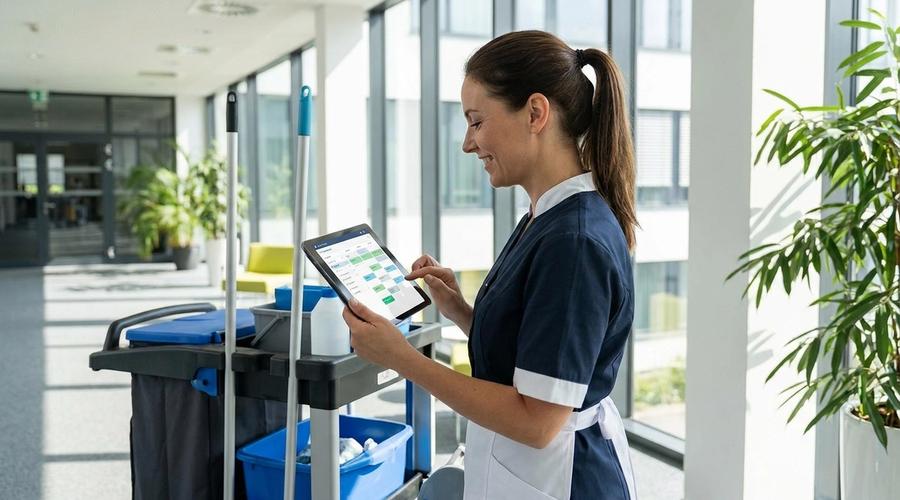
Start with a decision your business makes every day: a cleaner calls in sick shortly before a shift. Can a supervisor see which site needs cover, make a sound change and confirm that the replacement knows what to do? That test reveals more about scheduling accuracy than a polished demonstration.
From a founder’s perspective, the question is also whether a system still supports good decisions as the business grows. Ask a cleaner to report an absence in a test scenario. Have a supervisor arrange cover, then ask the replacement to find the site instructions without a separate message. If either has to reconstruct the situation from messages or spreadsheets, the information is not yet working hard enough for the team.
Software’s place in the cleaning industry
Cleaning software should support the people responsible for the work, not turn every exception into an office task. When assessing team coordination, enter a customer request about one site and ask the supervisor and cleaner to find it. Check whether each person has enough context to respond without chasing someone else for an update.
The right test depends on the business. A house cleaning business may need close coordination around changing appointments; a contractor serving multiple sites must also keep local teams and managers aligned. In either case, judge the software by how clearly it helps people act, rather than by how much it records.
Think beyond a single tool
Treat software as part of an ecosystem: the people, systems and partners involved in delivering a cleaning contract. Write down one instruction, who updates it and where its outcome appears. Then ask a supplier to show how that update reaches another system your business uses, without entering it again.
This matters because an isolated tool can solve one task while leaving the wider operation fragmented. FacilityApps advocates open standards and APIs (connections that let systems exchange data) so cleaning companies can use their operational data beyond one platform. That is a strategic position to assess, not a reason to assume every integration will suit your setup.
Where should AI fit?
AI is most useful when it helps staff interpret information already produced by their work. For example, a system might flag a pattern in recurring issues or prepare a response to a scheduling disruption. A supervisor should still check the context and make the decision.
Dirk Tuip, FacilityApps’ founder and CEO, argues for AI within cleaning operations rather than a separate chatbot. Ask a supplier to demonstrate one AI suggestion: have them show the data behind it, let a supervisor correct it and check whether the team can act on the correction in its normal workflow. The aim is better-supported team coordination, not automation for its own sake.
FacilityApps won the Amsterdam Innovation Award in the Digital Tools & Software category at Interclean Amsterdam 2026, recognising it among the best software on show, alongside the Cleaners’ Choice Award for its virtual reality training for cleaners, developed with its specialist training label Cleaning Workx. This builds on an earlier Amsterdam Innovation Award for best software in 2021. Those wins reflect recognition at a point in time; they do not establish FacilityApps as the best overall software for every cleaning company. The company’s own focus sits less on award cycles and more on continuously improving the software by listening to customers and the market. Use such recognition as evidence of sector involvement, then test the platform against your own operation. (intercleanshow.com)
For a contractor covering several sites, that test could begin with one absence and end when the replacement cleaner has the right instructions. Follow the same event through the supervisor’s decision and the customer update. Where the chain breaks, you have a useful question for any supplier.
The best software for cleaning companies fits the way their people coordinate work and keeps useful information connected across the business. Test a real scenario with your team, then ask suppliers to show how their approach handles it.
What is the best software for cleaning companies?
There is no single best choice for every company. The strongest fit helps your cleaners and supervisors handle real changes, keeps relevant information connected and gives people control over decisions, including those supported by AI. Test those points in a scenario from your own business.
Related posts
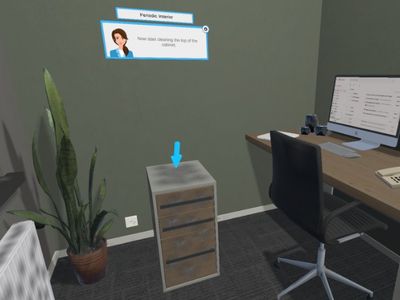
Cleaning Workx, powered by FacilityApps, launches new 'Periodic Cleaning' training modules
Cleaning Workx introduces the Periodic Interior and Periodic Sanitary modules — the most requested addition among existing customers. Available immediately in 18 languages as part of the core platform.
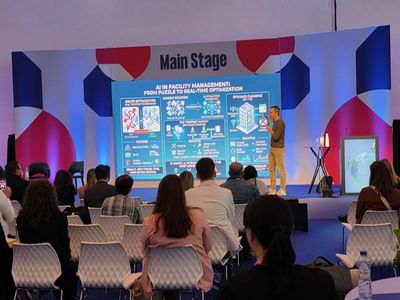
From invisible to intelligent: the cleaning industry must shape its own AI future
A manifesto for the cleaning industry: will we be passive recipients of AI disruption, or active architects of our own transformation? CEO Dirk Tuip wrote a manifesto for the next decade.
Digitise your workflows with the new multi-step forms
New in FacilityApps: multi-step forms. One form goes through multiple roles and stages, while all information is stored centrally. No loose papers, no lost emails - just a fast, transparent workflow.